The Two-Minute Rule for a Lighter To-Do List
The two-minute rule says that if a task takes less than two minutes, do it now. Learn how to use it to keep your to-do list light without losing focus.
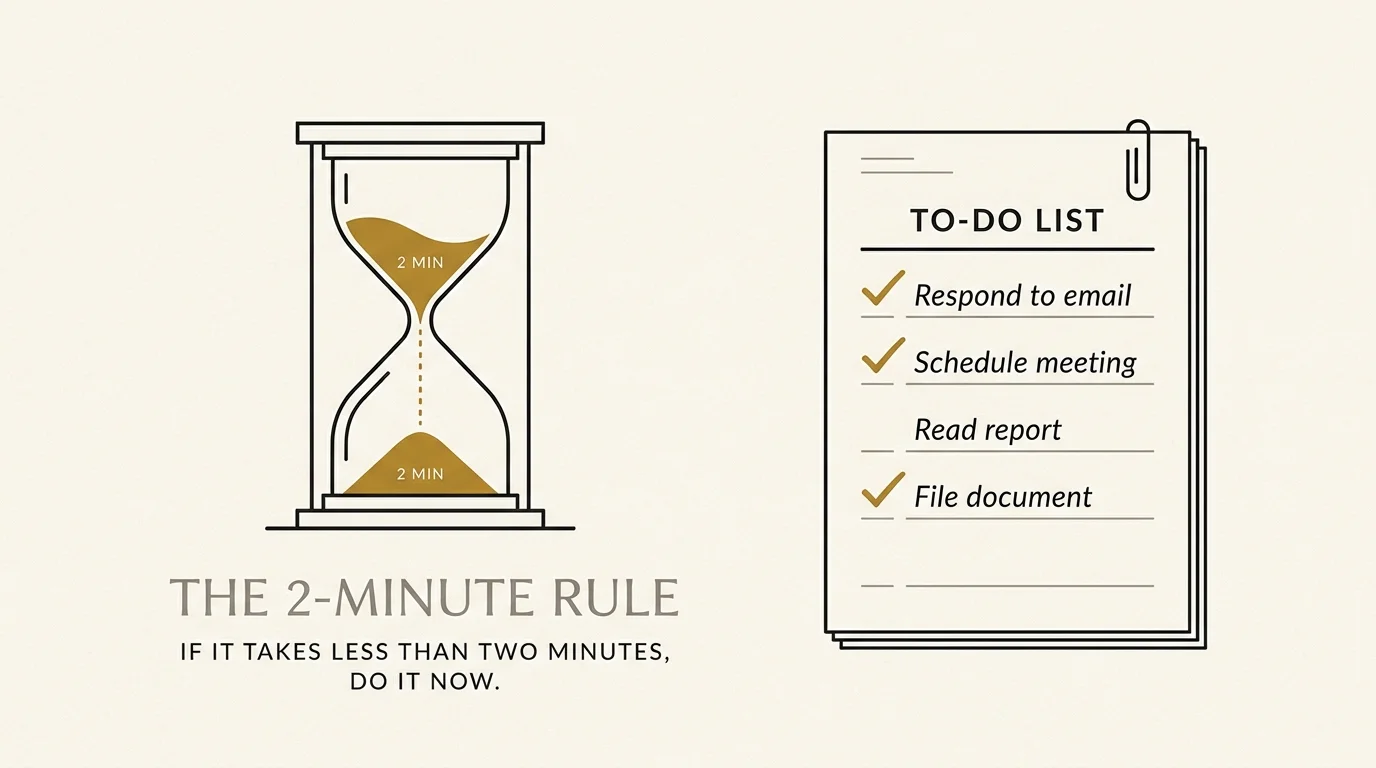
Some to-do lists are long not because of big projects, but because of dozens of tiny tasks: reply to this, file that, book the other thing. Each one is small, but together they create a heavy, cluttered feeling. The two-minute rule is a simple way to clear that clutter and keep your to-do list lighter.
What the two-minute rule is
The rule comes from David Allen’s Getting Things Done method. It is very short: if a task will take less than two minutes, do it now.
The logic is that writing the task down, tracking it and remembering it later takes more effort than simply doing it. A two-minute task that sits on your list for a week costs much more than two minutes of attention.
Examples of two-minute tasks:
- Replying “yes, Thursday works” to a message.
- Putting a bill into your filing folder.
- Adding a dentist appointment to your calendar.
- Sending a file that someone asked for.
- Washing your coffee cup.
Why it makes such a difference
It stops small tasks piling up
Tiny tasks are easy to postpone because they feel unimportant. But a list full of them hides the tasks that really matter. Clearing them as they appear keeps your list focused on meaningful work.
It reduces mental load
Each open task takes up a little space in your mind. Closing small loops right away gives you a cleaner head for bigger thinking.
It builds a habit of action
Doing small things immediately creates momentum. Many people find that finishing three quick tasks makes it easier to start a larger one.
When to use it, and when not to
The two-minute rule is powerful, but it can also become a trap. If you apply it every time something pops up, your whole day turns into small reactions.
Good moments to use it:
- When you are processing your inbox or notes.
- During a short admin block.
- Between focus sessions.
- At the end of the day, while tidying up.
Moments to avoid it:
- During deep work or a focus block.
- When you are already late for something more important.
- When “two minutes” is really fifteen.
During focus time, capture the small task in a quick note and handle it later in a batch. Our guide to batching small tasks shows how to group them.
Be honest about the two minutes
Many tasks feel like two minutes but are not. “Quickly check that report” can easily become half an hour. A useful test: could you do it without opening anything new, searching for anything or making a decision that needs thought? If not, it is not a two-minute task. Write it down and schedule it.
| Task | Really two minutes? |
|---|---|
| Confirm a meeting time | Yes |
| Forward a document | Yes |
| “Quickly” fix a slide | Usually no |
| Reply to a complex email | No |
| Book a table at a restaurant online | Often yes |
| Sort out a billing dispute | No |
The two-minute rule for habits
There is a second, related idea, popularised by James Clear in Atomic Habits: when you start a new habit, shrink it into a version that takes two minutes or less. “Read before bed” becomes “read one page”. “Exercise” becomes “put on running shoes”.
The goal is not to stop at two minutes forever. It is to make starting so easy that you show up every day. Once the habit is established, it naturally grows. We explore this idea further in tiny habits: start so small you can’t fail.
A simple daily routine with the rule
- Morning: spend ten minutes going through new messages and notes, doing every two-minute task you find.
- Focus blocks: capture small tasks without acting on them.
- Afternoon admin block: clear the captured small tasks.
- Evening: a two-minute tidy of your list and desk.
Doing this in Week Notes & Tasks
In Week Notes & Tasks, a quick note works as your capture spot while you focus: jot the small items there instead of acting on them. When you process the note later, do the two-minute ones immediately and turn the longer ones into tasks with due dates in the List view. A tag like “quick” makes it easy to find small tasks for your next admin block. For the habit version of the rule, create a tiny habit such as “Read one page” and check it in with one tap each day.
Final thoughts
The two-minute rule is one of the simplest productivity ideas, and one of the most useful. Do tiny tasks immediately when you are processing, capture them when you are focusing, and be honest about what really takes two minutes. Your to-do list will feel lighter, and your important work will have more room to breathe.